


In the heart of a Canadian kitchen, the most important ingredient isn’t the Atlantic salmon or the prairie-grown potatoes. It’s the invisible foundation that makes everything possible: the oil.
As we move through 2026, the way we think about edible oil in Canada has shifted. We’ve moved past “low-fat” fads and into an era of functional culinary performance. Today’s Canadian cook isn’t just looking for something to grease a pan; they are looking for a partner in health, sustainability, and flavor integrity.
The New Gold Standard: Why Stability is the New “Healthy”
For years, the “healthiness” of an oil was measured purely by its vitamin content. While that still matters, 2026 is the year of Thermal Stability. Canadians are becoming savvy about “smoke points” the temperature at which an oil begins to break down and release harmful compounds.
This is where Vikmar Foods has carved out its reputation. By focusing on high-quality, refined Canola and specialty blends, Vikmar Foods provides the backbone for the high-heat techniques Canadians love, from searing Pacific scallops to the perfect Sunday morning stir-fry.
- Canola Oil: Still the “Patriotic Choice,” developed right here in the Canadian Prairies. It’s low in saturated fat and high in Omega-3s.
- The 80/20 Blend: A growing trend in Ontario and BC kitchens, blending the stability of vegetable oils with the rich, aromatic profile of Extra Virgin Olive Oil.
Sourcing with a Soul: The Vikmar Difference
In a market flooded with generic options, transparency has become a non-negotiable for Canadian consumers. Whether you are a professional chef in Toronto or a home cook in Calgary, knowing that your oil is Kosher, Halal, and BRCGS certified provides a layer of trust that goes beyond the label.
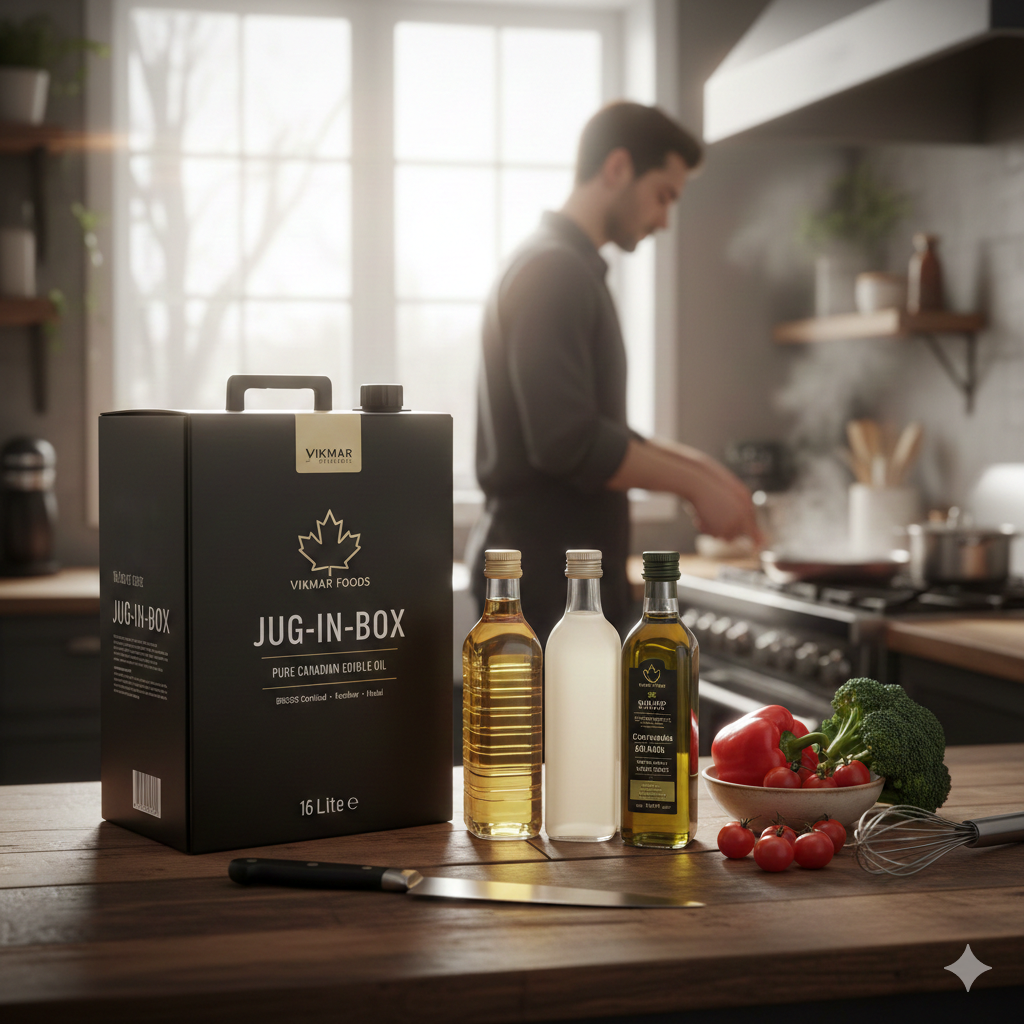
Vikmar Foods stands at the forefront of this movement. By ensuring rigorous quality checks and prioritizing efficient, sustainable packaging, like their innovative 16-litre “Jug-In-Box” they reduce plastic waste while keeping the oil protected from its two biggest enemies: light and oxygen.
3 Rules for the Modern Canadian Pantry
If you want to elevate your cooking in 2026, follow these three simple rules:
- Match the Heat to the Oil: Save your expensive finishing oils for salads. For roasting and frying, use a high-stability Canola or Soybean oil from a trusted supplier like Vikmar Foods to ensure your food stays nutritious and toxin-free.
- Think Bulk, Act Local: Large-scale packaging isn’t just for restaurants anymore. Buying in bulk (like the formats offered by Vikmar Foods) reduces your carbon footprint and ensures you never run out during a mid-winter blizzard.
- Check the Certifications: Look for BRCGS and ISO standards. These aren’t just acronyms; they are your guarantee that the oil has been handled with the highest food safety protocols in the world.
The Canadian Oil Playbook: Choosing Your Champion
In a country that experiences every season from humid summers to sub-zero winters, our cooking techniques vary wildly. You wouldn’t use a snow shovel to plant a garden; similarly, you shouldn’t use a delicate finishing oil for a deep-fry.
1. The Heavy Lifter: Deep Frying & High-Heat Roasting
When you’re making classic Canadian comfort food—like crispy fish and chips or golden poutine, you need an oil that won’t buckle under pressure.
- The Choice: Vikmar Foods Canola Oil.
- Why: With a high smoke point of approximately 450°F (232°C), it remains stable during long frying sessions. It’s a refined oil, meaning it won’t smoke out your kitchen or transfer “burnt” flavors to your food.
- Best for: Deep fryers, air fryers, and roasting root vegetables at high heat.
2. The Daily Driver: Sautéing & Stir-Frying
For the Monday-to-Friday hustle, you need an all-purpose workhorse that is healthy but doesn’t flavor your entire dish like a Mediterranean grove.
- The Choice: Vikmar Foods Soybean Oil or Canola-Olive 80/20 Blend.
- Why: Soybean oil is cost-effective and neutral, perfect for quick sears. If you want a hint of sophistication without the low smoke point of pure olive oil, the 80/20 Blend offers the best of both worlds: the heart-healthy benefits of olive oil with the heat-resistance of vegetable oil.
- Best for: Sautéing chicken breasts, pan-frying pierogies, or quick vegetable stir-fries.
3. The Flavor Architect: Dressings & Finishing
When the heat is off, the flavor is on. This is where the “personality” of the oil matters most.
- The Choice: Vikmar Foods Extra Virgin Olive Oil.
- Why: Sourced with the same BRCGS-certified rigor as their bulk products, this oil is meant to be tasted. It’s rich in polyphenols and antioxidants which are best preserved when not exposed to high heat.
- Best for: Drizzling over BC hothouse tomato salads, whisking into balsamic vinaigrettes, or as a dip for crusty sourdough.
Comparison at a Glance
| Cooking Method | Recommended Vikmar Product | Smoke Point | Flavor Profile |
| Deep Frying | Canola Oil | ~450°F | Neutral |
| Stir-Frying | Soybean Oil | ~450°F | Neutral/Light |
| Pan-Searing | 80/20 Canola-Olive Blend | ~420°F | Hint of Olive |
| Salads/Dips | Extra Virgin Olive Oil | ~375°F | Rich & Peppery |
Pro-Tip: The “Jug-In-Box” Advantage
For high-volume Canadian kitchens (restaurants or large families), Vikmar Foods’ 16-litre Jug-In-Box is a game changer. Unlike traditional clear plastic bottles, the box prevents photo-oxidation (light damage), keeping your oil fresher for much longer, crucial for maintaining that high smoke point.
The Future is Clear (and Golden)
The next time you hear that satisfying sizzle in your skillet, take a moment to appreciate the science in the pan. Edible oil is no longer a commodity; it’s a conscious choice. With brands like Vikmar Foods leading the way in purity and reliability, Canada’s culinary future is looking brighter, and tastier, than ever.



Leave a Reply